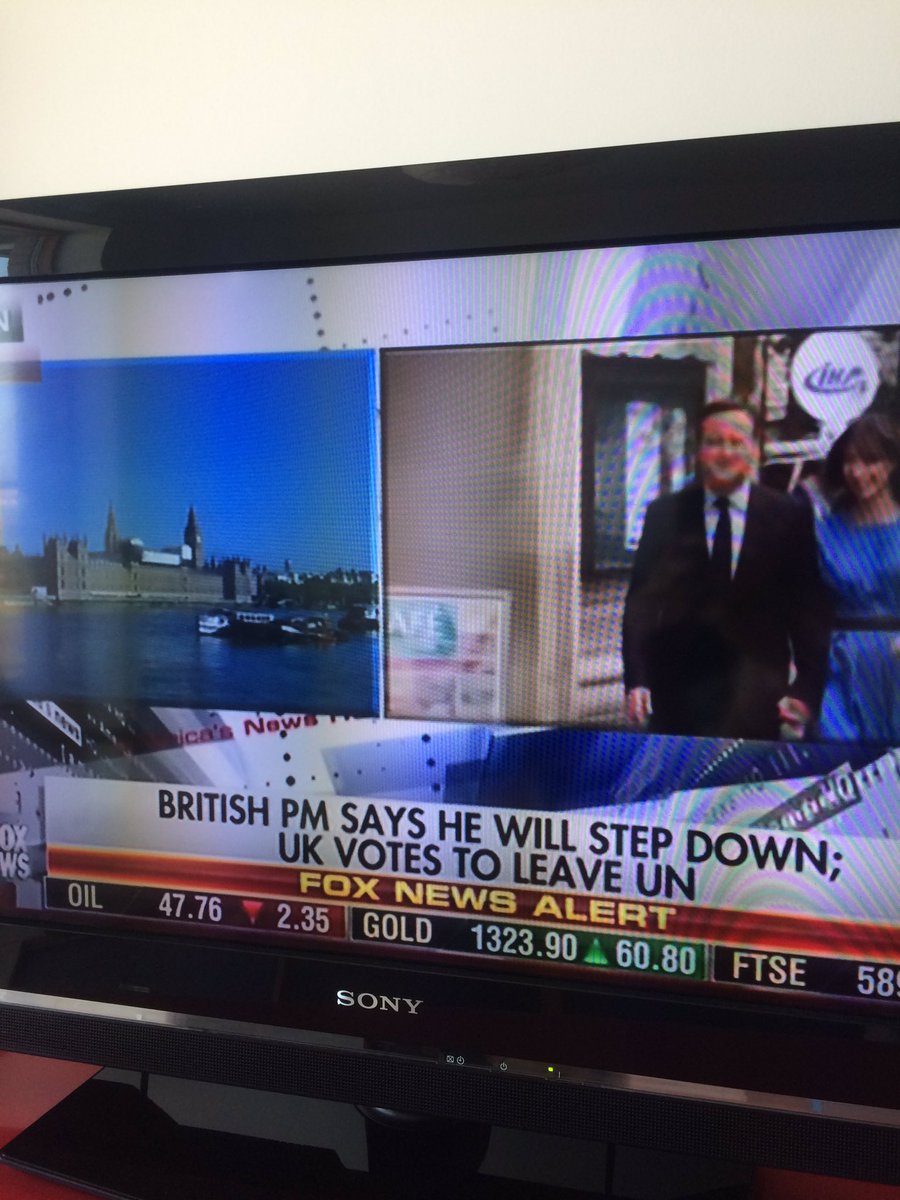
The fact that only 36% of voter aged 18 to 24 voted, the young have nothing to complain about.
Well 36% of them do.
And 64% of them don't. Still I bet they can keep you up to date with the Kartrashians.
The Ruf, The Ruf, The Ruf is on Fire!!
The fact that only 36% of voter aged 18 to 24 voted, the young have nothing to complain about.
Well 36% of them do.
Errr no...maybe 27%
The fact that only 36% of voter aged 18 to 24 voted, the young have nothing to complain about.
Well 36% of them do.
Possibly they wrongly assumed the older generation was wiser and looking out for generations to come. Misguided but understandable.
"...sure beats doin' stuff."
I think this is very well written about the poor turnout for younger voters...
Before the UK voted to Brexit, it was suggested that the turnout of young people could decide the result. If the youth rocked the vote, the logic went, Remain would win.
The official "Stonger In" campaign made an effort to engage young people using the patronizing "#votin" hashtag. The creator of this slogan felt that the omission of the "g" would mean it would appeal to young voters. This obviously failed.
The British media says areas with younger populations tended to have a lower turnout on referendum day. There is little conclusive proof that younger people were less likely to vote than older people, but it's not hard to see why that might be true.
There are several reasons. The first is the lack of political education. Many young people leave high school with only basic political knowledge. "We just know Labour is red, Tories are blue, and Liberal Democrats are yellow," as my 14-year-old sister put it. Nothing is really done to encourage an interest in politics, and unless people personally take it upon themselves to get involved, this often leads to many not caring and -- when they turn 18 -- not voting.
Politicians ignore them in their policies. It's a cycle that creates more disillusioned young people who don't vote, which means politicians ignore them even more.
Many of my friends who couldn't be persuaded to vote in the referendum didn't think politicians or politics in general did anything for them and they didn't see why the EU referendum would be any different. When there is a political atmosphere that mostly ignores the young, they mistakenly believe that the result will ignore them too. If we judged youth engagement by social media posts instead of voter turnout, it would seem young people were interested in the referendum. Facebook and Twitter were rife with young people engaging with the referendum, and -- on Friday -- expressing their anger with the result. Many young people felt betrayed -- not, interestingly, by the other young people that didn't vote, but by the country's older generations.
Of the 18-24 year olds that turned out, a YouGov poll suggests 75% voted Remain. Just 39% of voters over 65 did. These statistics are infuriating for many young people. They show that those who have to live with the consequences of the result for the shortest amount of time decided the future of those it affected most. The animosity between the generations certainly seems to have increased post-referendum.
A pro-Remain rally in Westminster on Tuesday night was flooded with young people pushing back at what they see as a betrayal of their progressive European values.
The young people talking about the referendum on Facebook, Twitter, and at protests are the engaged ones -- they're the ones who got out and voted. Among my friends and acquaintances, those who don't vote don't talk about the referendum on social media. The judgment of youth engagement based on social media and protest attendance -- suggesting that a lot are engaged but didn't vote -- is a distortion.
Ultimately though, poor turnout among young people in this referendum is not the fault of the Remain campaign. Whatever they had done, it's unlikely it would have increased turnout, nor was it down to specific disinterest in the referendum itself or the arguments being debated.
Yes, a portion of the blame should go to those young people who simply did not care enough to vote, but more importantly, blame also needs to be apportioned to the lack of political education in schools and the fact that so many politicians routinely ignore young people or target them ineffectively -- and then expect them to turn out to support their causes at key moments. A lot of the time when young people do have an opinion, they are told that their opinion is invalid precisely because they are young.
Would the result have been different if the majority of young people had turned up to vote? Perhaps. But is there anything that could have been done to make this happen? Sadly, because of the current political approach to young voters, probably not.
"...sure beats doin' stuff."
I think this is very well written about the poor turnout for younger voters...
Before the UK voted to Brexit, it was suggested that the turnout of young people could decide the result. If the youth rocked the vote, the logic went, Remain would win.
The official "Stonger In" campaign made an effort to engage young people using the patronizing "#votin" hashtag. The creator of this slogan felt that the omission of the "g" would mean it would appeal to young voters. This obviously failed.
The British media says areas with younger populations tended to have a lower turnout on referendum day. There is little conclusive proof that younger people were less likely to vote than older people, but it's not hard to see why that might be true.
There are several reasons. The first is the lack of political education. Many young people leave high school with only basic political knowledge. "We just know Labour is red, Tories are blue, and Liberal Democrats are yellow," as my 14-year-old sister put it. Nothing is really done to encourage an interest in politics, and unless people personally take it upon themselves to get involved, this often leads to many not caring and -- when they turn 18 -- not voting.
Politicians ignore them in their policies. It's a cycle that creates more disillusioned young people who don't vote, which means politicians ignore them even more.
Many of my friends who couldn't be persuaded to vote in the referendum didn't think politicians or politics in general did anything for them and they didn't see why the EU referendum would be any different. When there is a political atmosphere that mostly ignores the young, they mistakenly believe that the result will ignore them too. If we judged youth engagement by social media posts instead of voter turnout, it would seem young people were interested in the referendum. Facebook and Twitter were rife with young people engaging with the referendum, and -- on Friday -- expressing their anger with the result. Many young people felt betrayed -- not, interestingly, by the other young people that didn't vote, but by the country's older generations.
Of the 18-24 year olds that turned out, a YouGov poll suggests 75% voted Remain. Just 39% of voters over 65 did. These statistics are infuriating for many young people. They show that those who have to live with the consequences of the result for the shortest amount of time decided the future of those it affected most. The animosity between the generations certainly seems to have increased post-referendum.
A pro-Remain rally in Westminster on Tuesday night was flooded with young people pushing back at what they see as a betrayal of their progressive European values.
The young people talking about the referendum on Facebook, Twitter, and at protests are the engaged ones -- they're the ones who got out and voted. Among my friends and acquaintances, those who don't vote don't talk about the referendum on social media. The judgment of youth engagement based on social media and protest attendance -- suggesting that a lot are engaged but didn't vote -- is a distortion.
Ultimately though, poor turnout among young people in this referendum is not the fault of the Remain campaign. Whatever they had done, it's unlikely it would have increased turnout, nor was it down to specific disinterest in the referendum itself or the arguments being debated.
Yes, a portion of the blame should go to those young people who simply did not care enough to vote, but more importantly, blame also needs to be apportioned to the lack of political education in schools and the fact that so many politicians routinely ignore young people or target them ineffectively -- and then expect them to turn out to support their causes at key moments. A lot of the time when young people do have an opinion, they are told that their opinion is invalid precisely because they are young.
Would the result have been different if the majority of young people had turned up to vote? Perhaps. But is there anything that could have been done to make this happen? Sadly, because of the current political approach to young voters, probably not.
I'm not really in favour, but if it had been compulsory to vote the outcome might have been different.
If you are old and wise you were probably young and stupid
I think this is very well written about the poor turnout for younger voters...
Before the UK voted to Brexit, it was suggested that the turnout of young people could decide the result. If the youth rocked the vote, the logic went, Remain would win.
The official "Stonger In" campaign made an effort to engage young people using the patronizing "#votin" hashtag. The creator of this slogan felt that the omission of the "g" would mean it would appeal to young voters. This obviously failed.
The British media says areas with younger populations tended to have a lower turnout on referendum day. There is little conclusive proof that younger people were less likely to vote than older people, but it's not hard to see why that might be true.
There are several reasons. The first is the lack of political education. Many young people leave high school with only basic political knowledge. "We just know Labour is red, Tories are blue, and Liberal Democrats are yellow," as my 14-year-old sister put it. Nothing is really done to encourage an interest in politics, and unless people personally take it upon themselves to get involved, this often leads to many not caring and -- when they turn 18 -- not voting.
Politicians ignore them in their policies. It's a cycle that creates more disillusioned young people who don't vote, which means politicians ignore them even more.
Many of my friends who couldn't be persuaded to vote in the referendum didn't think politicians or politics in general did anything for them and they didn't see why the EU referendum would be any different. When there is a political atmosphere that mostly ignores the young, they mistakenly believe that the result will ignore them too. If we judged youth engagement by social media posts instead of voter turnout, it would seem young people were interested in the referendum. Facebook and Twitter were rife with young people engaging with the referendum, and -- on Friday -- expressing their anger with the result. Many young people felt betrayed -- not, interestingly, by the other young people that didn't vote, but by the country's older generations.
Of the 18-24 year olds that turned out, a YouGov poll suggests 75% voted Remain. Just 39% of voters over 65 did. These statistics are infuriating for many young people. They show that those who have to live with the consequences of the result for the shortest amount of time decided the future of those it affected most. The animosity between the generations certainly seems to have increased post-referendum.
A pro-Remain rally in Westminster on Tuesday night was flooded with young people pushing back at what they see as a betrayal of their progressive European values.
The young people talking about the referendum on Facebook, Twitter, and at protests are the engaged ones -- they're the ones who got out and voted. Among my friends and acquaintances, those who don't vote don't talk about the referendum on social media. The judgment of youth engagement based on social media and protest attendance -- suggesting that a lot are engaged but didn't vote -- is a distortion.
Ultimately though, poor turnout among young people in this referendum is not the fault of the Remain campaign. Whatever they had done, it's unlikely it would have increased turnout, nor was it down to specific disinterest in the referendum itself or the arguments being debated.
Yes, a portion of the blame should go to those young people who simply did not care enough to vote, but more importantly, blame also needs to be apportioned to the lack of political education in schools and the fact that so many politicians routinely ignore young people or target them ineffectively -- and then expect them to turn out to support their causes at key moments. A lot of the time when young people do have an opinion, they are told that their opinion is invalid precisely because they are young.
Would the result have been different if the majority of young people had turned up to vote? Perhaps. But is there anything that could have been done to make this happen? Sadly, because of the current political approach to young voters, probably not.
I'm not really in favour, but if it had been compulsory to vote the outcome might have been different.
If online voting had be introduced, you'd have seen a massive turnout from younger generation I'd suggest. I'd like to see that introduced here in NZ. Unfortunately, in many cases, those who most need to vote, don't.
"...sure beats doin' stuff."
I think this is very well written about the poor turnout for younger voters...
Before the UK voted to Brexit, it was suggested that the turnout of young people could decide the result. If the youth rocked the vote, the logic went, Remain would win.
The official "Stonger In" campaign made an effort to engage young people using the patronizing "#votin" hashtag. The creator of this slogan felt that the omission of the "g" would mean it would appeal to young voters. This obviously failed.
The British media says areas with younger populations tended to have a lower turnout on referendum day. There is little conclusive proof that younger people were less likely to vote than older people, but it's not hard to see why that might be true.
There are several reasons. The first is the lack of political education. Many young people leave high school with only basic political knowledge. "We just know Labour is red, Tories are blue, and Liberal Democrats are yellow," as my 14-year-old sister put it. Nothing is really done to encourage an interest in politics, and unless people personally take it upon themselves to get involved, this often leads to many not caring and -- when they turn 18 -- not voting.
Politicians ignore them in their policies. It's a cycle that creates more disillusioned young people who don't vote, which means politicians ignore them even more.
Many of my friends who couldn't be persuaded to vote in the referendum didn't think politicians or politics in general did anything for them and they didn't see why the EU referendum would be any different. When there is a political atmosphere that mostly ignores the young, they mistakenly believe that the result will ignore them too. If we judged youth engagement by social media posts instead of voter turnout, it would seem young people were interested in the referendum. Facebook and Twitter were rife with young people engaging with the referendum, and -- on Friday -- expressing their anger with the result. Many young people felt betrayed -- not, interestingly, by the other young people that didn't vote, but by the country's older generations.
Of the 18-24 year olds that turned out, a YouGov poll suggests 75% voted Remain. Just 39% of voters over 65 did. These statistics are infuriating for many young people. They show that those who have to live with the consequences of the result for the shortest amount of time decided the future of those it affected most. The animosity between the generations certainly seems to have increased post-referendum.
A pro-Remain rally in Westminster on Tuesday night was flooded with young people pushing back at what they see as a betrayal of their progressive European values.
The young people talking about the referendum on Facebook, Twitter, and at protests are the engaged ones -- they're the ones who got out and voted. Among my friends and acquaintances, those who don't vote don't talk about the referendum on social media. The judgment of youth engagement based on social media and protest attendance -- suggesting that a lot are engaged but didn't vote -- is a distortion.
Ultimately though, poor turnout among young people in this referendum is not the fault of the Remain campaign. Whatever they had done, it's unlikely it would have increased turnout, nor was it down to specific disinterest in the referendum itself or the arguments being debated.
Yes, a portion of the blame should go to those young people who simply did not care enough to vote, but more importantly, blame also needs to be apportioned to the lack of political education in schools and the fact that so many politicians routinely ignore young people or target them ineffectively -- and then expect them to turn out to support their causes at key moments. A lot of the time when young people do have an opinion, they are told that their opinion is invalid precisely because they are young.
Would the result have been different if the majority of young people had turned up to vote? Perhaps. But is there anything that could have been done to make this happen? Sadly, because of the current political approach to young voters, probably not.
I'm not really in favour, but if it had been compulsory to vote the outcome might have been different.
If online voting had be introduced, you'd have seen a massive turnout from younger generation I'd suggest. I'd like to see that introduced here in NZ. Unfortunately, in many cases, those who most need to vote, don't.
The Green party in NZ try to engage with youf more than any other party. Still only delivers 10 % of the vote. If people don't want to be engaged they won't be. That is fine. That is there right. But to not become engaged and not vote then grizzle afterwards gives me the sharks.
We of course have the same discussion after every election here.
compulsory voting is bad. It's just as much someone's right to not vote, as it is their right to vote.
Forcing people to randomly select an option when they don't really want to doesn't exactly lead to a representative outcome.
Allegedly
compulsory voting is bad. It's just as much someone's right to not vote, as it is their right to vote.
Forcing people to randomly select an option when they don't really want to doesn't exactly lead to a representative outcome.
Very few people agree with everything thing a political party stands for or has a party that delivers everything you want you just have to look at what group best represents you.
compulsory voting is bad. It's just as much someone's right to not vote, as it is their right to vote.
Forcing people to randomly select an option when they don't really want to doesn't exactly lead to a representative outcome.
Agree, plus 10% of the people probably don't know their arse from their elbow/ are brain dead or just don't care.
There are quite a few countries that have compulsory voting.
If you are old and wise you were probably young and stupid
Perhaps too much time is spent on teaching them to be politically correct instead of politically aware?
The Ruf, The Ruf, The Ruf is on Fire!!
compulsory voting is bad. It's just as much someone's right to not vote, as it is their right to vote.
Forcing people to randomly select an option when they don't really want to doesn't exactly lead to a representative outcome.
Very few people agree with everything thing a political party stands for or has a party that delivers everything you want you just have to look at what group best represents you.
compulsory voting is bad. It's just as much someone's right to not vote, as it is their right to vote.
Forcing people to randomly select an option when they don't really want to doesn't exactly lead to a representative outcome.
Very few people agree with everything thing a political party stands for or has a party that delivers everything you want you just have to look at what group best represents you.
compulsory voting is bad. It's just as much someone's right to not vote, as it is their right to vote.
Forcing people to randomly select an option when they don't really want to doesn't exactly lead to a representative outcome.
Very few people agree with everything thing a political party stands for or has a party that delivers everything you want you just have to look at what group best represents you.
compulsory voting is bad. It's just as much someone's right to not vote, as it is their right to vote.
Forcing people to randomly select an option when they don't really want to doesn't exactly lead to a representative outcome.
Very few people agree with everything thing a political party stands for or has a party that delivers everything you want you just have to look at what group best represents you.
The stock market in London had the best week since 2011.
If you are old and wise you were probably young and stupid
Bruter and Harrison said they found turnout among young people to be far higher than data has so far suggested. “Young people cared and voted in very large numbers. We found turnout was very close to the national average, and much higher than in general and local elections.
“After correcting for over-reporting [people always say they vote more than they do], we found that the likely turnout of 18- to 24-year-olds was 70% – just 2.5% below the national average – and 67% for 25- to 29-year-olds.
Bruter and Harrison said they found turnout among young people to be far higher than data has so far suggested. “Young people cared and voted in very large numbers. We found turnout was very close to the national average, and much higher than in general and local elections.
“After correcting for over-reporting [people always say they vote more than they do], we found that the likely turnout of 18- to 24-year-olds was 70% – just 2.5% below the national average – and 67% for 25- to 29-year-olds.
http://www.theguardian.com/politics/2016/jul/02/br...
LSE poll sample: 2000 Central & East London hipsters.
"At the end of the drive the lawmen arrive...
I'll take my chance because luck is on my side or something...
Her name is Rio, she don't need to understand...
Oh Rio, Rio, hear them shout across the land..."
Bruter and Harrison said they found turnout among young people to be far higher than data has so far suggested. “Young people cared and voted in very large numbers. We found turnout was very close to the national average, and much higher than in general and local elections.
“After correcting for over-reporting [people always say they vote more than they do], we found that the likely turnout of 18- to 24-year-olds was 70% – just 2.5% below the national average – and 67% for 25- to 29-year-olds.
http://www.theguardian.com/politics/2016/jul/02/br...
LSE poll sample: 2000 Central & East London hipsters.
That's impressive: 3 dismissive stereotypes in one glib response.
Bruter and Harrison said they found turnout among young people to be far higher than data has so far suggested. “Young people cared and voted in very large numbers. We found turnout was very close to the national average, and much higher than in general and local elections.
“After correcting for over-reporting [people always say they vote more than they do], we found that the likely turnout of 18- to 24-year-olds was 70% – just 2.5% below the national average – and 67% for 25- to 29-year-olds.
http://www.theguardian.com/politics/2016/jul/02/br...
Had an e-mail from a friend in the UK today and their comment was - 'In our family all the adults were for Remain and the kids for Leave '
This really surprised me.
If you are old and wise you were probably young and stupid
Bruter and Harrison said they found turnout among young people to be far higher than data has so far suggested. “Young people cared and voted in very large numbers. We found turnout was very close to the national average, and much higher than in general and local elections.
“After correcting for over-reporting [people always say they vote more than they do], we found that the likely turnout of 18- to 24-year-olds was 70% – just 2.5% below the national average – and 67% for 25- to 29-year-olds.
http://www.theguardian.com/politics/2016/jul/02/br...
Had an e-mail from a friend in the UK today and their comment was - 'In our family all the adults were for Remain and the kids for Leave '
This really surprised me.
It's a hard one to figure out for me. I've seen people who are the most chilled people I know close to tears. I've seen people label 16 million people as thickos and racists, rather than even try to figure out why they'd vote that way. It's been two Eton and Oxford chaps having fisticuffs. A campaign for what should have been hope and an internationalist future as a campaign for fear.
It seems like something that isn't going to change much, so if Britain stays in the free trade zone they have to have freedom of movement etc etc, and something that is going to change everything- Cameron going, parties canabalising each other, markets panicking, alliances realigning and so on.
Bruter and Harrison said they found turnout among young people to be far higher than data has so far suggested. “Young people cared and voted in very large numbers. We found turnout was very close to the national average, and much higher than in general and local elections.
“After correcting for over-reporting [people always say they vote more than they do], we found that the likely turnout of 18- to 24-year-olds was 70% – just 2.5% below the national average – and 67% for 25- to 29-year-olds.
http://www.theguardian.com/politics/2016/jul/02/br...
LSE poll sample: 2000 Central & East London hipsters.
That's impressive: 3 dismissive stereotypes in one glib response.
Sorry, should've been: Not an LSE poll sample: 2000 provincial chavs.
"At the end of the drive the lawmen arrive...
I'll take my chance because luck is on my side or something...
Her name is Rio, she don't need to understand...
Oh Rio, Rio, hear them shout across the land..."